I’ve been a certified nursing assistant (CNA) for 2 years.
Whether it’s from friends, family, or my own patients, I get asked many questions about my job and what work is like in the medical field everyday. Perhaps its because I look so young or maybe its because not many people know someone who is a CNA, but my job is usually a talking point within my interpersonal conversations. I want to share with you all what led me down this career path, what an everyday shift looks like for me, and my personal experience as a certified nursing assistant!
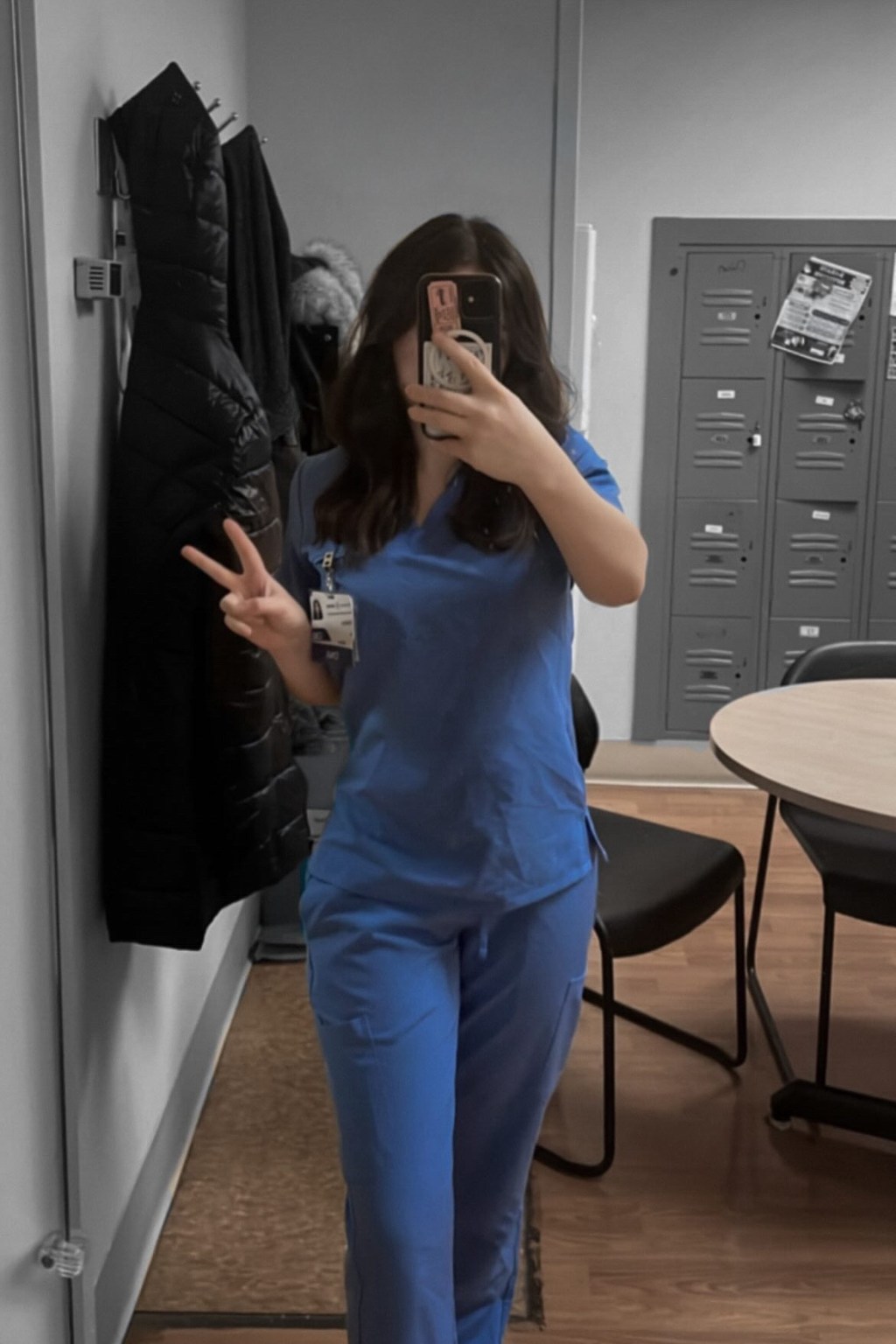
WHAT IS A CNA?
A brief intermission incase my readers don’t know what a CNA is or exactly what we do:
A certified nursing assistant and/or also called a nursing assistant certified (NAC/NA) works directly along side nurses and the general care team to provide basic level care to patients and residents. In general nurses will delegate the patient’s hygiene, mobility and feeding to the CNAs. Depending on what type of facility you work in you also might do vital signs, transportation, blood sugar checks, EKGs, set up and stock medical supplies and log patient information.
GETTING MY CERTIFICATION
People first ask why and how I became a CNA. Its a fairly simple reason and it has to do with my long term goal and career path. Although I’ve meet many wonderful CNAs who do this as a long term career (they are literal experts and amazing at their job), I am using this position as a stepping stone to become a register nurse. Not only would the experience look good on my nursing school application, it was also highly advised to start as a CNA before jumping into nursing. This is advised because nursing is glorified in the media. It is not glamorous. Many nursing students graduate, get burnt out and change career paths after only a few years. Working as a CNA gets you use to the 12-hour shifts, patient care, a high-stress environment; it helps you learn if this is the right field that you want to further your time and education into.
The summer after my senior year of high school I enrolled in a local program to get my CNA license. I often get asked how long it took to earn my license or what kind of schooling I had. Thankfully this is usually just asked out of curiosity! In Washington state to apply for your license you need to havetaken an accredited program, meet the numbers of clinical hours and experience, and pass the written and skills state exams. My program was 5 weeks long, which consisted of 4 weeks of in person hands-on learning 4 days a week. Followed by one week of clinicals, which would start at 5am and run to 3pm at a local nursing home. After the 5 week program you could set up dates to take your state tests. I got my CNA license in September of 2024 and started working under my license in October.
HOSPITAL vs. NURSING HOMES
The most common facility you’ll find CNAs in are nursing homes or SNFs (skilled nursing facility). This is because a large portion of our license and education is working with nursing home residents and helping them perform daily tasks like, eating, putting on clothes, walking to the bathroom, showering, brushing teeth etc. The state exams are geared a lot more towards this type of care and work environment.
You can also work in a hospital like me! I preferred a hospital environment because I knew it would get me closer to my long term goal by giving me many more opportunities to learn a variety of skills and by giving me a variety of patients to care for. I work on a generally easier unit called the CEU (cardiac evaluation unit) . Most of my patients are observation patients which mean the turnover rate is fast, as they are usually admitted to the hospital to take a few tests (CT, MRI, stress test, etc.). However, I get floated around my hospital often so I’ve had a chance to work in many different departments and units like: cardiac rehab, med surg, renal, surgery, oncology, thoracic, psych, and even the emergency department and ICU.
The entire time I was in the program, despite doing clinicals at a nursing home, I knew I was gonna work at a hospital instead. I was very adamant on working in a specific hospital near by my college, which happened to be the 2nd largest hospital in Washington state with roughly 630 beds. Luckily, one of the professors of my CNA program was a retired nurse from the hospital. When I was applying, I asked for a letter of recommendation. He did me one better and e-mailed the hiring manager directly, recommending me personally to her.
MY EVERYDAY SHIFT
I technically cant share my “everyday shift” because I actually work at night! I work .9FTE (which means I work 90% of Full Time Employment), three days a week for 12.5 hours a day. My shift start at 6:30pm and end at 7:00am. I chose to work nights because of the pay increase and honestly just to try it out!
A RUNDOWN OF MY AVERAGE NIGHT :
A little before my shift starts I get onto the unit and check the assignment to find out, which patient rooms are mine and who ill be working with. At 6:30pm I start the shift by joining the rest of the night shift team in a huddle. Here we receive a general report from day shift about the entire unit. After the huddle I go receive a more detailed report on my patients from day shift CNAs (handoff). At my hospital we round on patient every hour, CNAs do odd numbers (7pm, 9pm, 11pm etc.) while nurses do even numbers (8pm, 10pm, 12am, etc.). This means after report I start making my way to do rounds. My rounds at 7:00pm usually consist of: introducing myself to the patient, updating their whiteboard in the room, taking out any dinner trays, small talk and taking out carts to be restocked in the morning. Later in the night rounding could just mean popping my head in the dark room to make sure they are sleeping well.
After 7pm rounds I start checking vitals, which are followed by blood sugar checks around 9:00pm. In between all of these mentally organized and planned out events (like vitals and blood sugars at their specific times) I answer call lights. Patients call for a variety of reasons, sometimes its simple tasks like getting them snacks, water or a warm blanket. Other times they call to be transferred, cleaned up, or for medication. Throughout my shift, I will continue to chart and do rounds on my patients every odd hour. I will continue to get vitals either every 4 hours or 8 hours. I keep answering call lights and often help my coworkers with patients who have heavier care. Most shifts I get an admission or two throughout the night and have to help the nurse with the admission procedure.
This is how an average night looks. Usually the shift starts busy and it eventually slows down around midnight, then it picks up again at the end of the shift around 4am. However, as simple as it sounds on paper there are many other factors and tasks I might have to deal with on shift. Sometimes there are aggressive or manipulative patients which might result in a code grey (security needed) or abuse of staff and recourses. Other times there are critical patients where the team has to act fast and increase their level of care. I have had patients that begin to have a stroke, overdose or need CPR for some other reason (code blue). You might end up floating in the middle of the shift due to staffing demands on another unit, which means getting report all over again.
Depending on the unit you might have a heavier work load. One of the most demanding units I’ve worked on was surgery. There are a lot more tubes and drains to empty and monitor, like colostomy’s, foleys, JP drains, wound vacs, etc. A lot of the patents on this floor also need CHD (chlorhexidine gluconate) baths. These are chemical baths that kill bacteria to prevent infection on center lines. You also need to change all the bedding and clothes of the patient. However, most of these patients are heavy care for pre-op or post-op and require your help to complete the baths. Surgery is also very big on ambulating patients after surgery for a better recovery. When I first started as a CNA this was an intimidating task, since I had to carry around all the drains and drag the IV poles while trying to make sure a new hip-replacement patient doesn’t fall!
I’ve gained so many skills and experiences from working as a CNA. I also have a ton of crazy, silly, and emotional stories I carry from each of my patients. In my second part to this post (which I will link once posted) I plan on diving into the emotional and philosophical aspects of my job.
Thank you for reading!
 Amber Mckenzie
Leave a comment